


From Brain Talk to Brain Walk – Schema Therapy & Mode Work Using Daniel Siegel’s Brain Integration Model l Online Training l 2026-2027 I Schema Therapy Scotland
From Brain Talk to Brain Walk
Schema Therapy and Mode Work Using Daniel Siegel’s Brain Integration Model
Trainer – Dr. Christof Loose, Clinical Psychologist and author, based at the Centre for Schema Therapy Dusseldorf & Private Practice for Psychotherapy and author of ‘Schema Therapy for Children and Adolescents’ (Pavilion).
Venue – ONLINE (Interactive Zoom Training)
Registrations: Please complete the application form by scrolling to the bottom of this page. We will invoice you using the details you provide on the application form. Alternatively, if you wish to pay for the full training by credit card, please click on the registration link:
Cost: £150 (early bird rate*); £170 (standard)
Dates – 28th, 29th May, 2027
(9am – 1220h (CEST; including 20 min break)
Target Group: This workshop is designed for participants who have completed at least a two‑day introductory Schema Therapy workshop, either for children and adolescents (ST‑CA) or for individual adult clients (ST), and/or who are equivalently familiar with the core concepts of Schema Therapy. No prior knowledge of brain anatomy or physiology is required.
Background: Schema Therapy (ST), developed by Jeffrey Young, is an enhancement and further development of Cognitive Behavioural Therapy (CBT). It places particular emphasis on integrating emotions and developmental aspects into both diagnostic and therapeutic processes. ST is based on a model involving schemas, modes, and basic emotional needs—and their “fate” throughout the course of life.
This workshop offers a hands-on way to work with schemas and modes using Daniel Siegel’s simplified brain model. Participants learn how frustrated emotional needs show up in the body and brain, and how these reactions activate child, parent, coping, Clever‑Wise, and Healthy Adult modes.
Using Siegel’s horizontal (left–right) and vertical (upper–lower) brain axes, clinicians will practice helping clients of all ages—from 9 to 99—locate their emotional and cognitive experiences in specific brain regions. Through guided exercises, participants learn how to invite clients to feel these areas, talk to them, and connect them to their activated modes.
An additional part of the workshop is the Brain Walk: taking the model outside the office into a garden or quiet space, where clients physically explore left–right and upper–lower brain states while moving their body (i.e., walking). This embodied approach strengthens awareness, regulation, and access to the Clever‑Wise mode (in children and adolescents) and the Healthy Adult mode (in adults).
The workshop concludes with practical techniques that help clients strengthen and develop the Clever‑Wise and Healthy Adult modes as a foundation for achieving their individual goals — including greater emotional regulation, clearer self‑reflection, more adaptive coping, and a deeper capacity for connection.
Recommended reading:
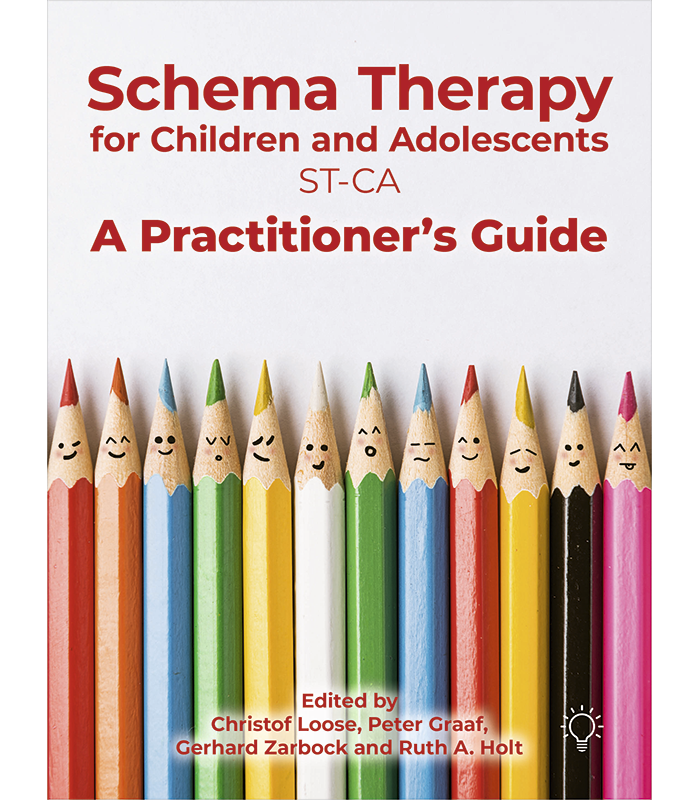
- Loose, C., Graaf, P., Zarbock, G., & Holt, R.A. (2020). Schema Therapy for Children and Adolescents – A Practitioner’s Guide. Pavilion.
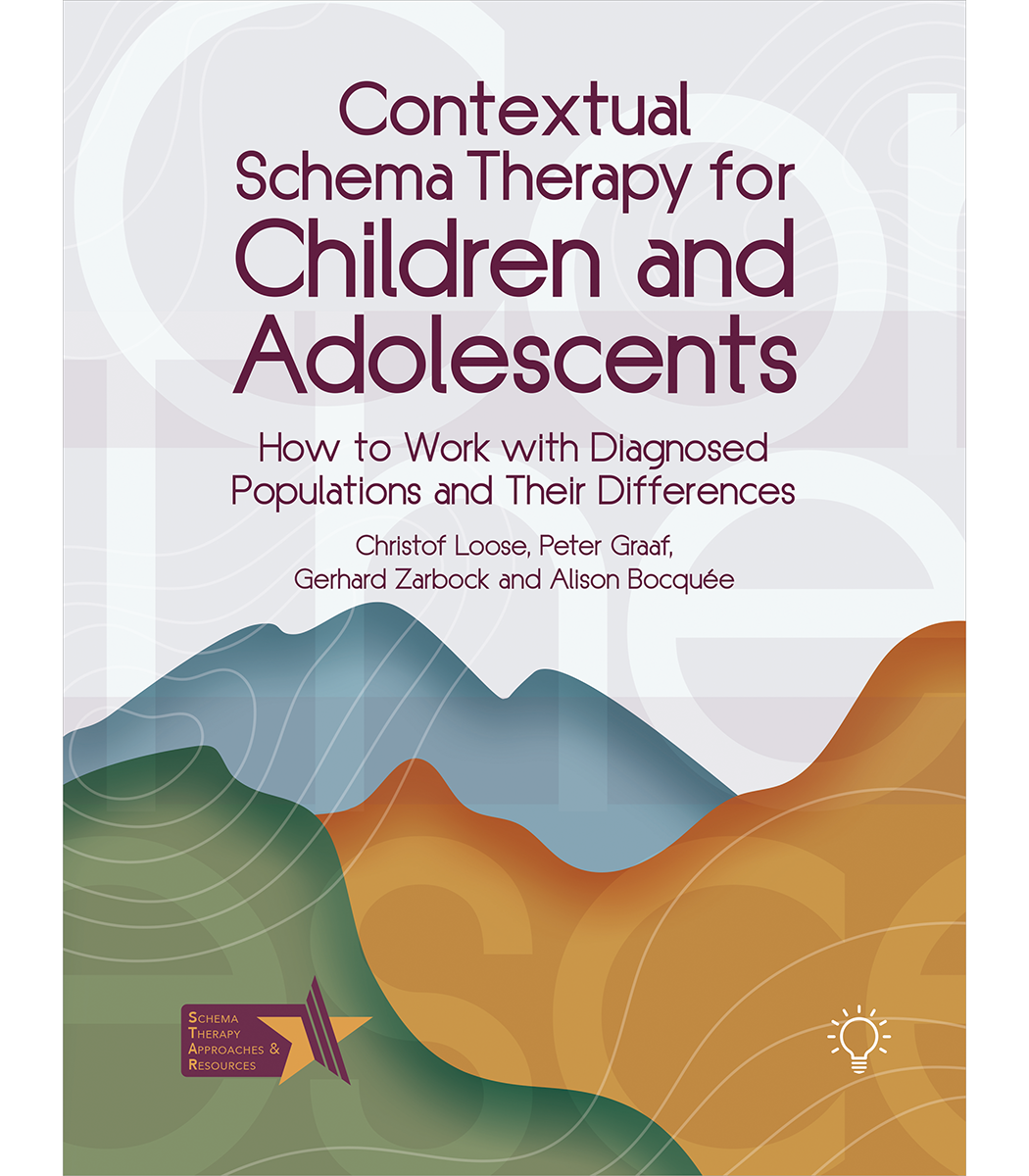
- Loose, C., Graaf, P., Zarbock, G., & Bocquee, A. (2026). Contextual Schema Therapy for Children and Adolescents: How to Work with Diagnosed Populations and Their Differences. Pavilion Publishing.
- Siegel, D. & Bryson, T. (2012). The Whole-Brain Child: 12 Revolutionary Strategies to Nurture Your Child’s Developing Mind.
- Siegel, D. & Bryson, T. (2015). No-Drama Discipline: The Whole-Brain Way to Calm the Chaos and Nurture Your Child’s Developing Mind.
BRIEF BIO OF THE MODERATOR
Christof Loose, PhD., Clinical Psychologist, Psychotherapist for Children and Adolescents (CBT), works in his own Private Practice in Dusseldorf, affiliated with the Heinrich-Heine-University, Department of Clinical Psychology, Germany 2012–2017, research activity e.g. in ST-CA (Development of Schema-Questionnaire for Children (DISC), Chair of the subcommittee Working Group in ST-CA 2013–2017, since 2013 advanced-level certified, trainer and supervisor (ISST e.V.), editor and author of ST-CA books and Video-Learning (DVD), conducts workshops and seminars in Schema Therapy for Children, Adolescents and Parents, worldwide.
Email: kontakt@psychotherapie-loose.de or contact@schematherapy-for-children.de
Webseiten: www.psychotherapie-loose.de or www.schematherapy-for-children.de
Christof is co-editor/author of the first book to adapt Schema Therapy for children and adolescents (ST-CA) in English:
Loose, C. Graaf, P. Zarbock, G., & Holt, R.A.(Editors) (2020). Schema Therapy with Children and Adolescents: A Practitioner’s Guide. UK: Pavilion Publishing
This book presents the ST-CA model & provides a clear, practical guide to clinical implementation. The book approaches ways of working with schemas & modes according to different developmental stages. It also provides specific guidance & creative ideas for engaging young people in each age group across the 5 key stages from infancy to age 23.
! Now available ! These books present the ST-CA model and provides a clear, practical guide to clinical implementation.
Registrations by credit card:
Please fill out the application form by scrolling to the bottom of this page.
Reduced rates: We offer reduced rates for several countries. This option is via invoice only. Please do not hesitate to ask!
Invoice/ Money transfer
After registration you will get an invoice. Where possible, transfers should be made via Wise.com which is one of the most efficient and low fee methods for transferring fees between countries.
EU Countries
You can use a bank transfer using Wise.com – details will be provided.
Non-EU Countries
Preferably, please use Wise.com (we will send you the details) which will allow for a low cost fee and exchange rate). Alternatively, if you prefer, please use PayPal and pay in GBP as the specified currency. PayPal will charge you an exchange rate whereas Wise.com only incurs a small conversion fee. With the invoice you will receive a Wise.com and PayPal-link for the payment.
UK – I will provide details on the invoice to allow you to make a fee-free bank transfer (or alternatively we can invoice your employer).
The event is organized by Schema Therapy Scotland
For enquiries regarding the training content please contact us at contact@schematherapy-for-
For enquiries regarding logistics and payment please contact us at info@schematherapyscotland.com
Evidence Base:
Systematic Review ST-CA (2026): Recent evidence for Schema Therapy with children and adolescents has been strengthened by a comprehensive systematic review published in 2026 in Clinical Child and Family Psychology Review. Synthesizing 21 studies conducted between 2000 and 2025, the review concludes that ST‑CA demonstrates consistent effectiveness across individual, group, and parent‑based formats, with significant improvements in emotion regulation, internalizing and externalizing symptoms, interpersonal functioning, and overall well‑being. Parent‑focused interventions were found to enhance child outcomes, parental insight, and family functioning, underscoring the systemic relevance of ST‑CA. Despite methodological heterogeneity, the authors highlight a growing and robust evidence base and call for standardized, developmentally sensitive randomized trials to further consolidate the field. This 2026 synthesis represents the most authoritative meta‑level evaluation of ST‑CA to date.
Reference: Uysal, M., Gurel, I. E., Ficicioglu, C., Mutlu, C., & Mutluer, T. (2026). A systematic review of individual, group, and parent-based schema therapy interventions for children and adolescents.
Clinical Child and Family Psychology Review. https://link.springer.com/article/10.1007/s10567-026-00568-4?utm_source=copilot.com#Sec9